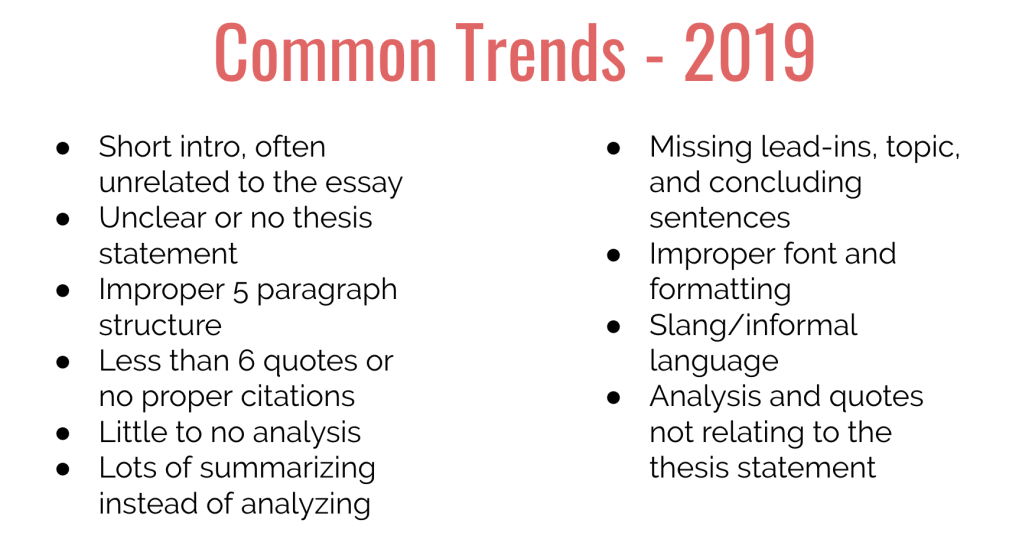
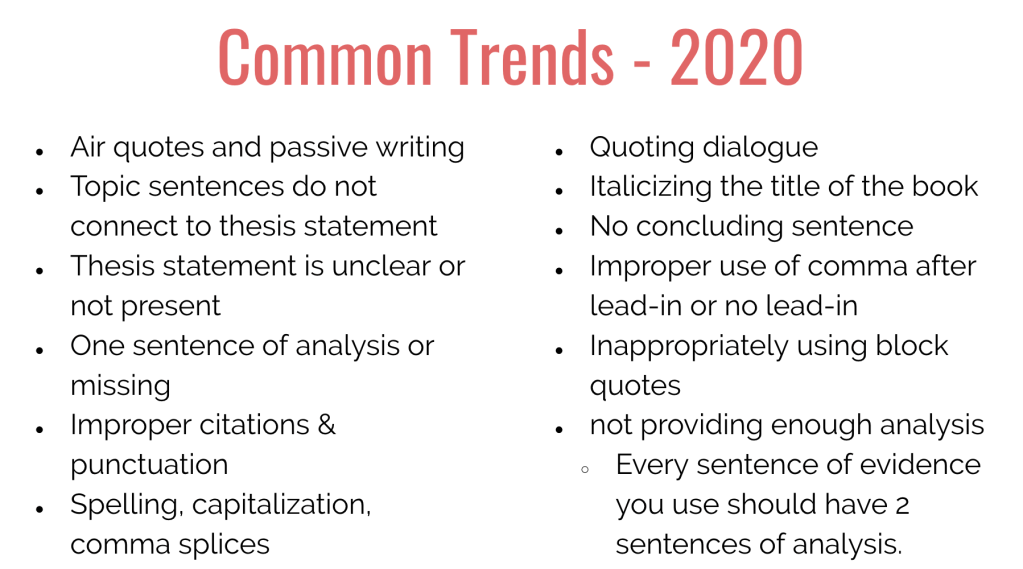
These are common essay mistakes after the first semester of the respective school year. In 2019, I taught 9th & 10th grade and noticed that they more or less had the same types of mistakes. If they were not a high achieving student, their essay was missing a lot of components. It was really clear that the student did not understand the purpose of or how to use topic sentences, evidence, analysis, concluding sentences, etc. Rather than just missing or incomplete parts, some of the essays didn’t make sense or lacked cohesion altogether—which told me there was a lack of clarity on my part.
Teachers often blame the students for the multitude of mistakes or failures, but sometimes it is the teacher or it is the way it was taught that was not clear
As I read the final exams, I started chalking up how many times I found missing evidence or lack of code-switching. It was frustrating to see how many students were not demonstrating they understood how to use the different components of a standard 5-paragraph essay. But I also had to take a step back and realize that I did not teach every grueling step until the students mastered it. At the time, I was so obsessed with trying to get students to produce essays to show the rest of my department that my head was above water. That I was actually teaching and not being
…an easy teacher
My superior/co-worker
To be honest, I got lucky my first year of teaching. A majority of students grasped the components of an essay quicker than I expected. I did not have to do as much front-loading because I could draw on their prior knowledge from the previous year. But that caused me to dismiss those that did not voice their struggles, did not understand, or could not keep up. And a majority of my students demonstrated high levels of self-advocacy or motivation to write. I have been told I do not give myself enough credit, but I cannot dismiss the fact that I lucked out having almost 2/3rds of my students being some form of high achieving or honors students.
In the 2020 common trends, I noticed a major change. Students were not making the same mistakes anymore. Instead, a majority of the common trends I found were formalities in spelling, punctuation, citations, formatting, etc.—which were a nuisance to make note of on every paper, but for the most part I was reading complete essays. And over the last few weeks I have been asking myself, why is that? Why are there more formality errors this year and not conceptual ones. Especially when I have been given mainstream classes and not students in an honors program.
After the “Common Trends – 2019”, my common trends or essay do’s and don’ts underwent serious reflection, adaptation—trial and error. After the Fall final (5-paragraph literary analysis essay) students were given an integrated writing assessment to see if they were capable of writing an informative/explanatory 5-paragraph timed essay. We then moved into another text, wrote an argumentative essay as well. My mentor/coach advised that I make this [common mistakes] intervention more consumable for the students and that I revise the body paragraph worksheets I created. See multiple attempts in the gallery below.
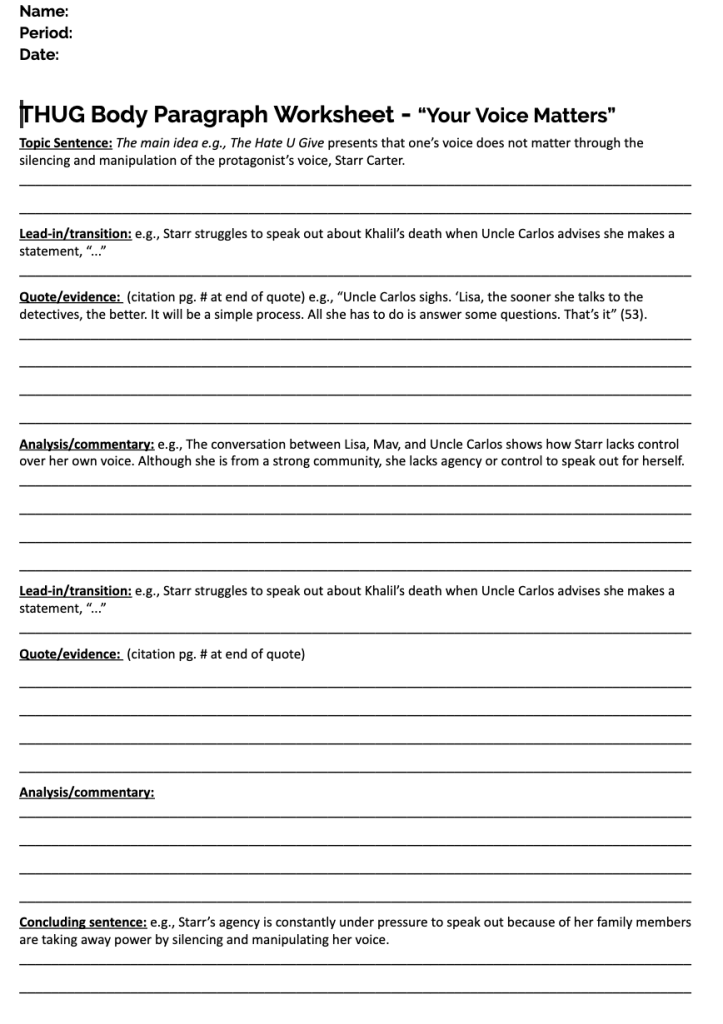
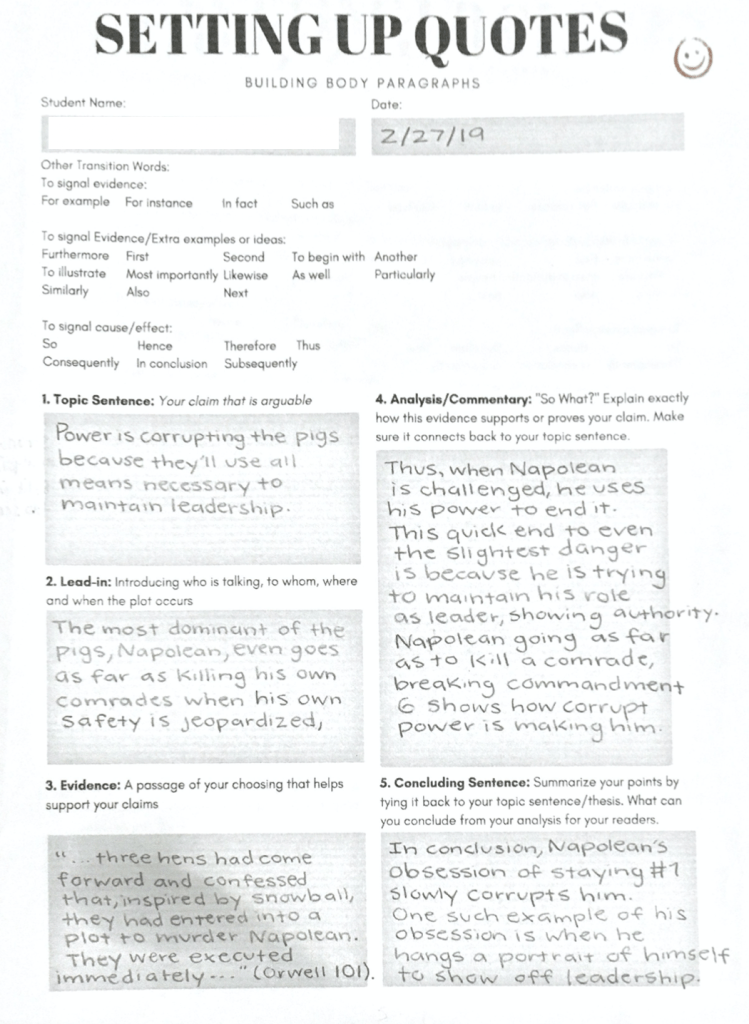
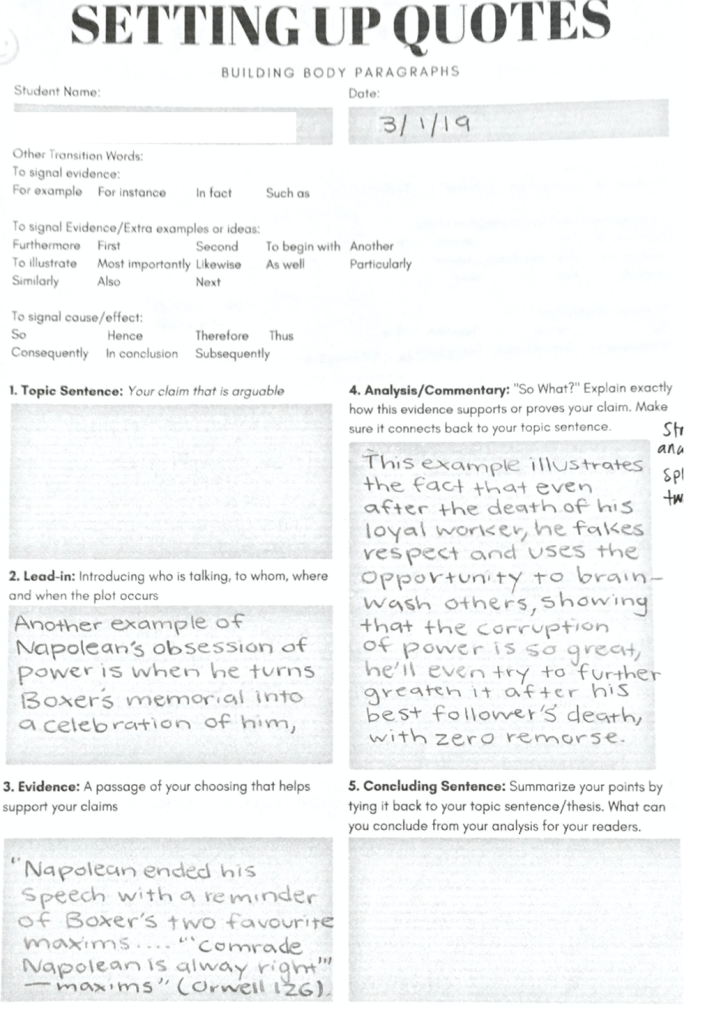
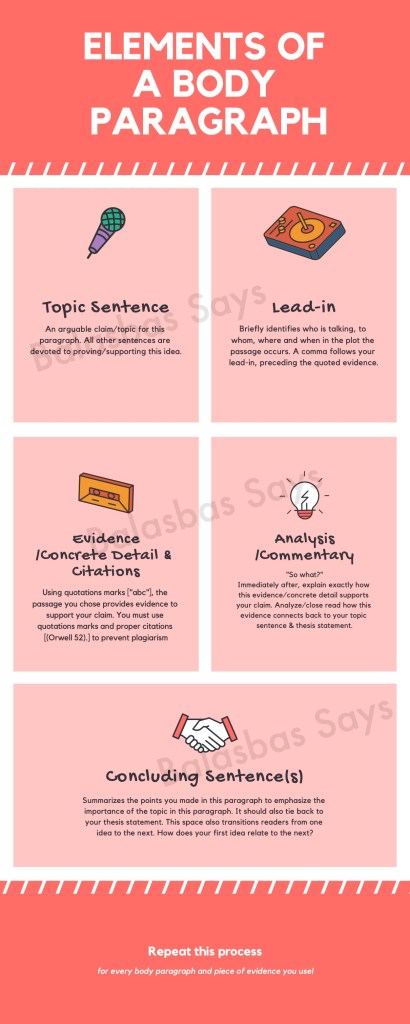
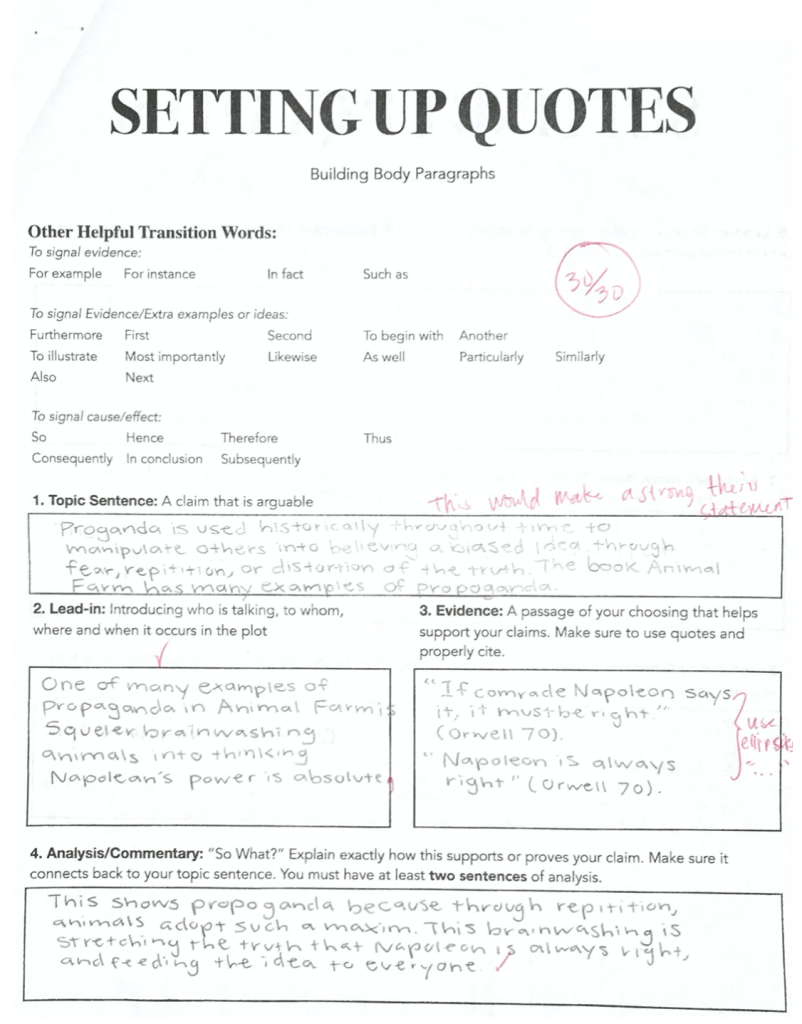
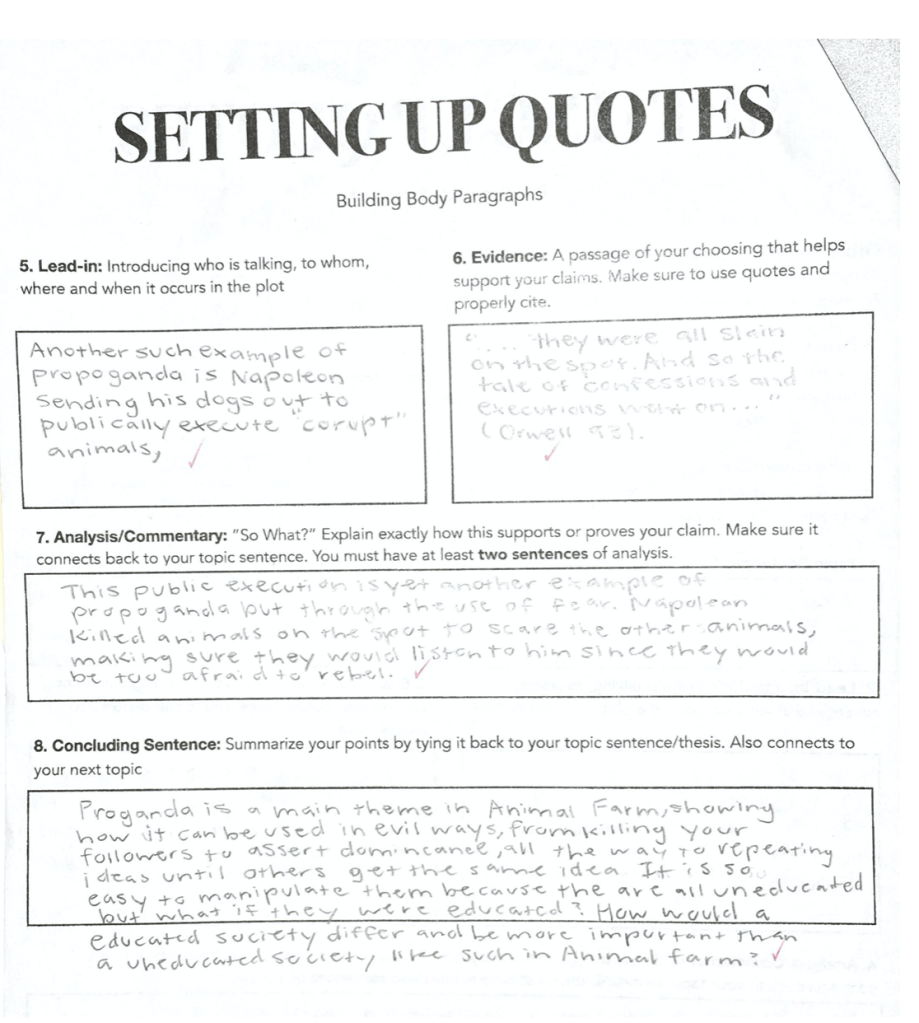
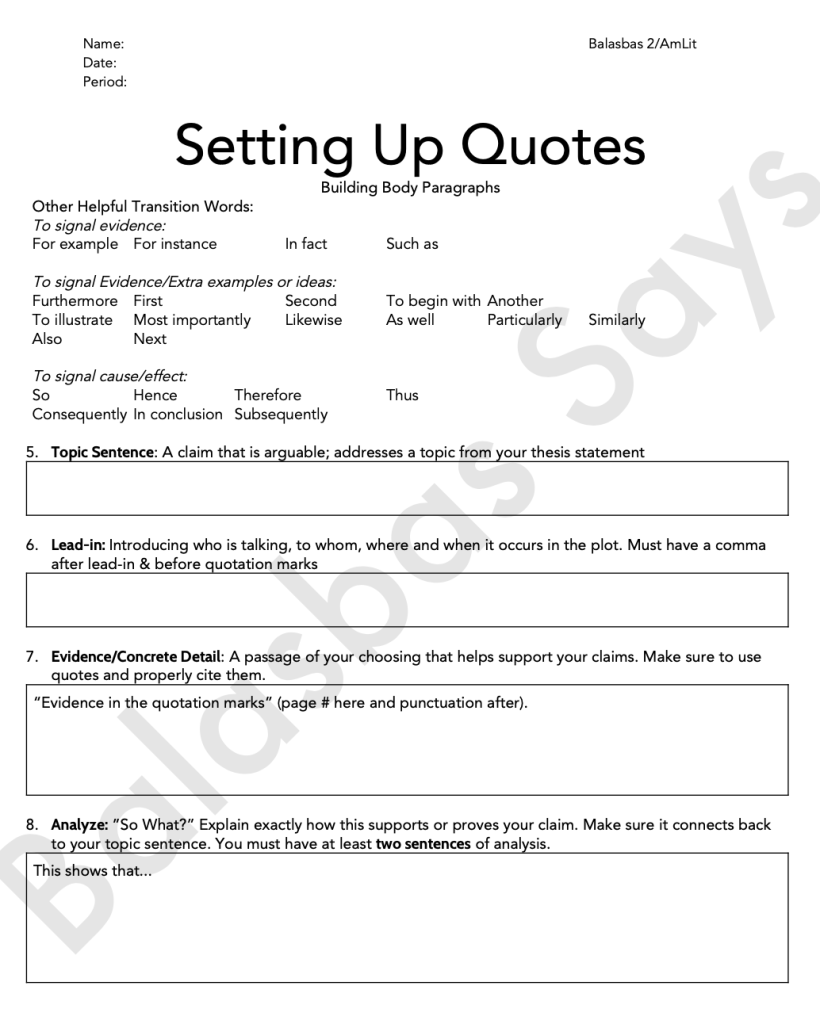
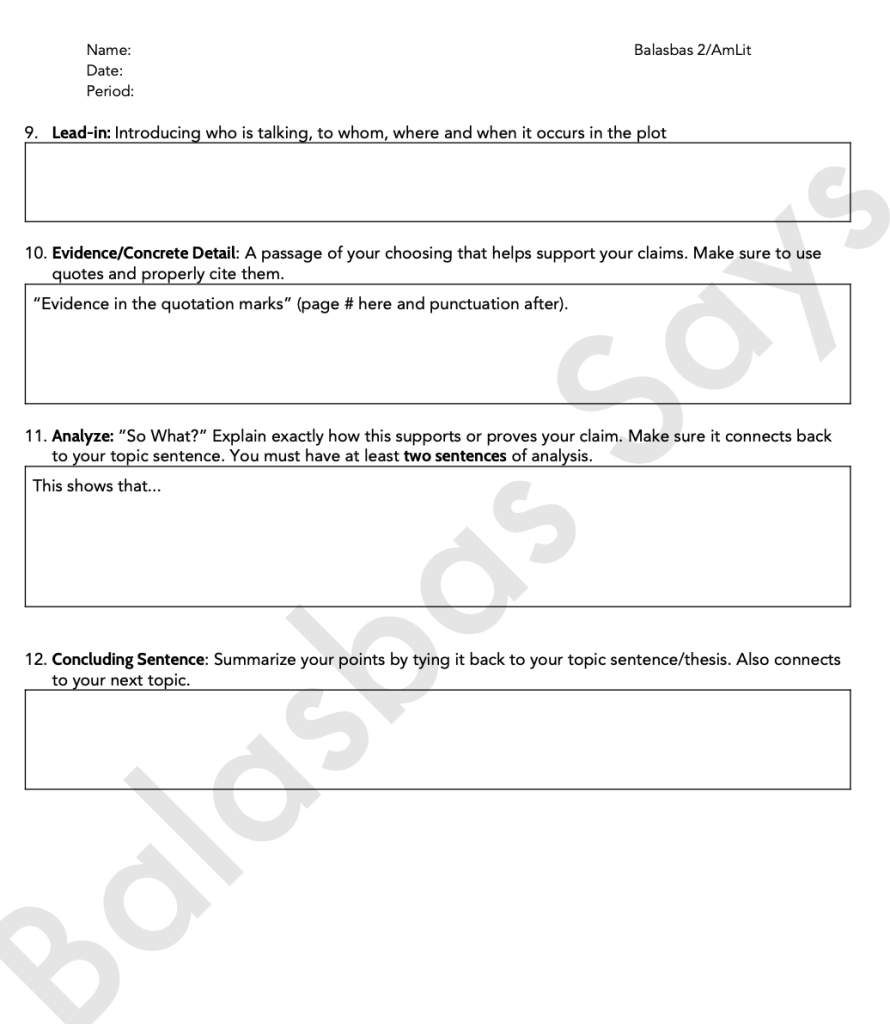
One of the most stressful things about teaching was realizing I didn’t have any worksheets for students to complete. Not just for busy work, but to help me teach. So the first one, I just whipped out because I could not find the one my master teacher used which had a T.E.A (Topic, Evidence, Analysis) formatting. The current (4th) version of the worksheet is the one with the watermark. I revised some of the language in each step after analyzing some student work with my mentor/coach.
We focused on why the lower-scoring students were turning in incomplete portions of the worksheet. He suggested that these students may need more scaffolding than just filling in the boxes, so I put in some guides in the evidence & analysis box for certain students.
Could we get more worksheets for the other body paragraphs? Or could you actually make one of the Introduction and Conclusion too?
10th grade student, Fall 2019
Thanks to the multiple revisions and this student asking for another scaffold, I think these scaffolds are the main reason the “Common Trends” changed from conceptual and lack of understanding to errors in formalities. Despite having a lot more higher achieving 9th/10th graders last year, my current 10th graders demonstrated understanding of all the moving pieces that make a 5-paragraph essay thanks to this new Essay Outline. It’s not 100% perfect, but it definitely feels like a lot of growth. And it’s reassuring to know that my instruction and expectations are getting clearer every time I teach essay writing skills.
 Balasbas Says