School has been closed since March 13th, 2020 and Governor Gavin Newsom ordered a Shelter-in-Place on March 17th, 2020. Despite other pandemics in recent decades (H1N1, SARS, Ebola, etc.) there hasn’t been a global pandemic or even state-wide shutdown during those times. And in accordance to SFUSD’s Continuity of Learning Protocol, all assignments at this point are optional. I’ve noticed that many students are overwhelmed, even myself with the sheer number of emails with teachers confused or frustrated on which online tool to use or how they’ll continue teaching during this time.
Although my students have a calendar to keep track of which chapter they should be annotating, I decided to assign an optional “Quaranteen Journal“. I was inspired by my blogs and an assignment my Aunt shared with me from another teacher, so I decided to adapt it to be more personal and a space of reflection for my students during this time. I’m not sure what will come of it, and I anticipated we would return to school at some point to discuss students’ experiences or journals as well.
Maybe 1/5th of my students have begun writing in their online journals. Some have shared photos, some videos, most are writing a lot more than I anticipated. It’s been very refreshing to read some of their journals because I haven’t shared even a digital space (like zoom or a conference call) with any of them.
This is an unprecedented time in history where all of us, especially youth, are being affected in a way no one has experienced. I found it important that we begin to document these narratives in the lack of hope the world is currently missing. If you or any teachers are looking to do an assignment like this, I highly suggest it and will link it on my website and here.
Once “Distance Learning” commences for my students I offered extra credit to those who have been writing and will ask students to write at least 1 journal a week for a grade during the semester. Here are some snapshots from some of the journals:
March 25, 2020: Today the superintendent announced that six Bay Area school districts will extend the closure through May 1st and SFUSD being one of them. Like I mentioned in one of the previous logs—I am surprised and not surprised that they have extended the closure. I’m glad they did keeping in mind public safety, but now what are the next steps as we enter another month working from home?
I read an article this morning on this idea of ‘panic-gogy‘—panic + pedagogy, that’s addressing the issue of curriculum design in this pandemic setting.
“So if people think that in three to five days they’re going to rejigger their course and build some super amazing online platform, that’s probably unlikely to happen,” -Robin DeRosa, Open Learning and Teaching Collaborative at Plymouth State University in New Hampshire Director
This is exactly what I have been feeling over the past couple of weeks. How are we supposed to transform the classroom experience and activities into a conference call? I have been using Google Classroom since I started teaching last year and my online space isn’t near where I want it to be. Google Classroom is great as an online portal, but for actual instruction, I’m not so sure. I’m not really sure there is any application right now that can replicate direct instruction. Yes, you can hold a Zoom call or a form of a conference call, but space itself really does matter.
Right now, I think educators are overwhelmed with the number of tools they could use to help replicate direct instruction or the classroom environment. There are too many options and I think it’s just creating more confusion for the students. How do we choose the right tool but then also teach them how to use it?
Another thing that this article has reminded me is something rooted in my pedagogy—student voice. I need to turn back to my students and ask them what do they think is the best fit for them. Creating a culturally responsive pedagogy isn’t solely connecting to their identity, but also adjusting with the learning space that’s being shared. Since we do not have one, how can we create one? I believe it is important for students to have input in how they learn, especially in this challenging time.
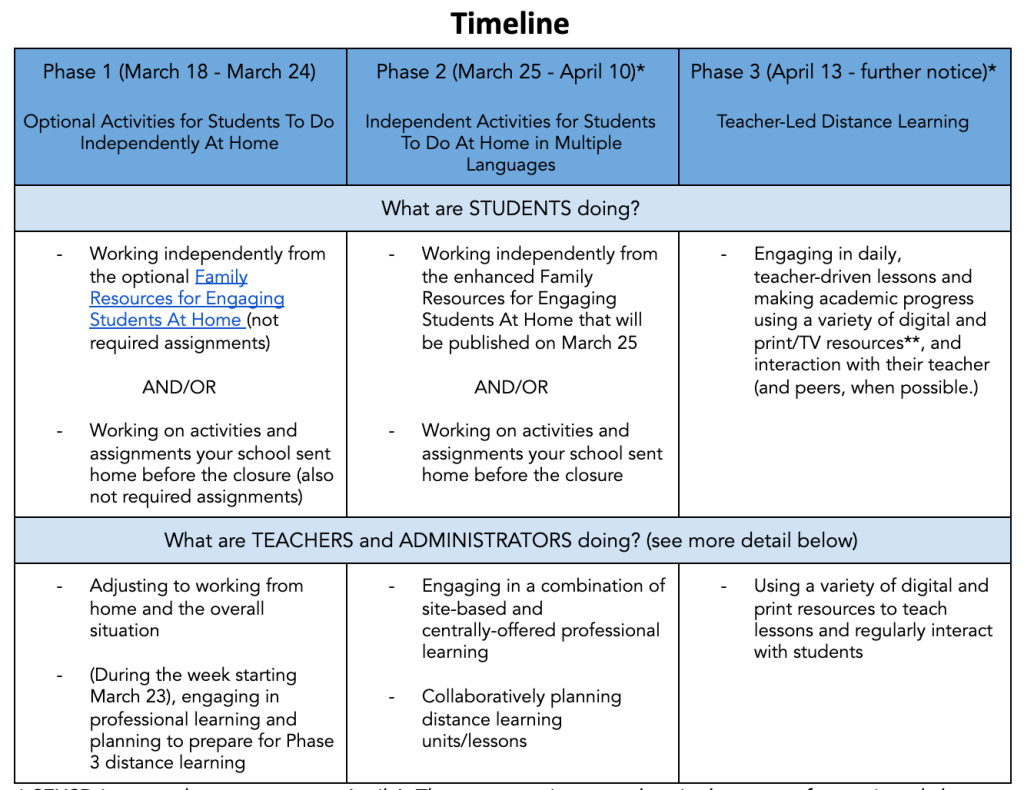
Currently, SFUSD has put out what they define as the “Continuity of Learning” to address what [at least our district is doing, not so sure across the state] students could be doing and what teachers should be doing.
SFUSD’s Timeline for “Continuity of Learning” & Distance Learning
Before the city-wide lockdown & shelter-in-place, I already anticipated that closure was upon us, especially with the nearby colleges/universities transitioning to online classes [you can read about it in: Log #1]. Many of my course material is already online via Google Classroom. And because so many families were pulling their kids out of school because of the novel coronavirus, I had revisited the unit calendar I share with my kids to provide those at home with a guide to where they should be with the text we were reading. I excused them from any in-class work because they would be missing the discussion portion which is vital to many of my in-class activities.
As soon as the first week of quarantine began I was ready to get online and teach. I was looking up how to stream on Twitch, preparing ideas for videos, and setting up other assignments for my students to continue building off of the ones we had done in February. However, over the course of last week, the situation evolved from a city-wide shut down to the county, to multiple Bay Area counties, then state. Then our superintendent and site administration advised and declared against holding students accountable for new assignments and grading.
So I took a backseat.
I’m still waiting for an executive order more from Governor Newsom than I am my administration. Every other day, the district is sending out updates stating there is no plan to extend school closure beyond Newsom’s executive date, April 7th, but they’re preparing for it just in case. But that preparation for “just in case” doesn’t really help teachers if they’re not a part of this preparation. In log #1 I mentioned how they’re advising us to participate in online PDs/Webinars to learn about online tools. Dozens, if not hundreds of teachers are participating, especially those that might be technology illiterate, but what about the rest of the teachers?
Colleges and universities have taken immediate action to transition professors and provide them tools or a protocol to take for the rest of the semester. But we’ve been waiting around for over a week for an order. Many teachers have taken it upon themselves to continue teaching, hosting lectures. I am following the advice to leave things as optional. I could also say I lucked out that my students are reading a book in both 10th & 11th grade. 10th would have started the essay writing process, but with the “Continuity of Learning,” I do not want to assign anything and have to re-teach it to the other half of the students who either aren’t paying attention from home or don’t have the resources to do so.
So, instead of teaching, I’ve taken it upon myself to just update my students with news and information from our district through videos and quick links. So far it has proven successful and positive feedback from the kids. Many of them have messaged me that they’ve been unaware of what’s going on. And that their other teachers are just bombarding them with assignments—despite the “Continuity of Learning,” protocol.
If it’s any help for you, your students or someone you know, feel free to check out these videos/playlist for any information on what my district is doing during this shelter-in-place or just for news/information on the situation.
It’s been an interesting past few months for humanity and especially the past few weeks for California. Throughout January & February, more racially charged instances towards Asian Americans and Asians all over the world were springing up. At first, it was very distant, through Twitter or videos on Instagram. Then it turned into violence towards the elderly, and then all ages of Asian Americans. The racial hate has evolved, some coming from within the Asian community as well.
I think it really hit when the first case popped up in Santa Clara. My students joked about COVID daily. And I would try to inform them of the situation through articles or other forms of social media. It wasn’t a topic that was trending on their media outlets. Then March rolled around. I never would’ve imagined that colleges would close campuses the same week. It was like a domino effect. First I heard from SFSU through friends, then SJSU, and then USF while my housemates were gone for spring break. I don’t think anyone was anticipating colleges/universities to shut down nationwide even before the government declared shelter-in-place across states.
The situation for colleges transformed rapidly and almost instantly. By the end of the week, it went from school closure for two-three weeks to canceling/postponing commencements and online classes for the rest of the semester. At the time, I remained at work and was surprised there was no action for public schools. The panic sparked parents into pulling their kids out of school. Classes were half empty and district-wide they allowed all absences to be excused so long as parents notified the school site it was in protection from COVID-19.
I wasn’t on the frontlines of the discussion, but the union, district, and other representatives were discussing the next steps every single day. And by March 13th, they declared to close school through Spring Break, April 3rd. Within a few days, San Francisco shut down and canceled all events or large gatherings. Following that, Gov. Gavin Newsom then declared shelter-in-place on 6 or 7 Bay Area counties through April 7th. Changing it to state-wide soon after.
The situation & deliberation for public schools is very interesting. From what I’ve heard, many private schools have taken action much like colleges/universities. Currently, my district is struggling to figure out the next steps. With only “advising” or “suggesting” that teachers take part in learning how to set up online classrooms and prepare for “distance learning” instead of mandating it. Educators are struggling all facing different challenges—whether that’s technology literacy, understanding what resources they have, gathering resources, or even having support in general. It’s a tough time for many of my colleagues, but I’m glad that I spent time preparing for this situation and just keeping many of my resources online in the first place.
The district immediately set in motion access to breakfast, lunch, and dinner for students once the closure started. I’m sure Newsom, SF County, and other government officials were deliberating on the cost and effects of public school closures.
There are around 1000 public schools across California and that serves at least 6 million students—1/6th of California’s population. This also affects their families; many of my students voiced to me leading into the few weeks before the SFUSD school closure that their parents were struggling to find someone to care for their younger children. That they would have to take time off work just to protect their kids. If it wasn’t for the state-wide shelter-in-place taking PTO in place of childcare would be detrimental to many of the low-middle class families that rely on public schools and other public services. Even now, finances are impacting everyone’s ability to survive during this quarantine.
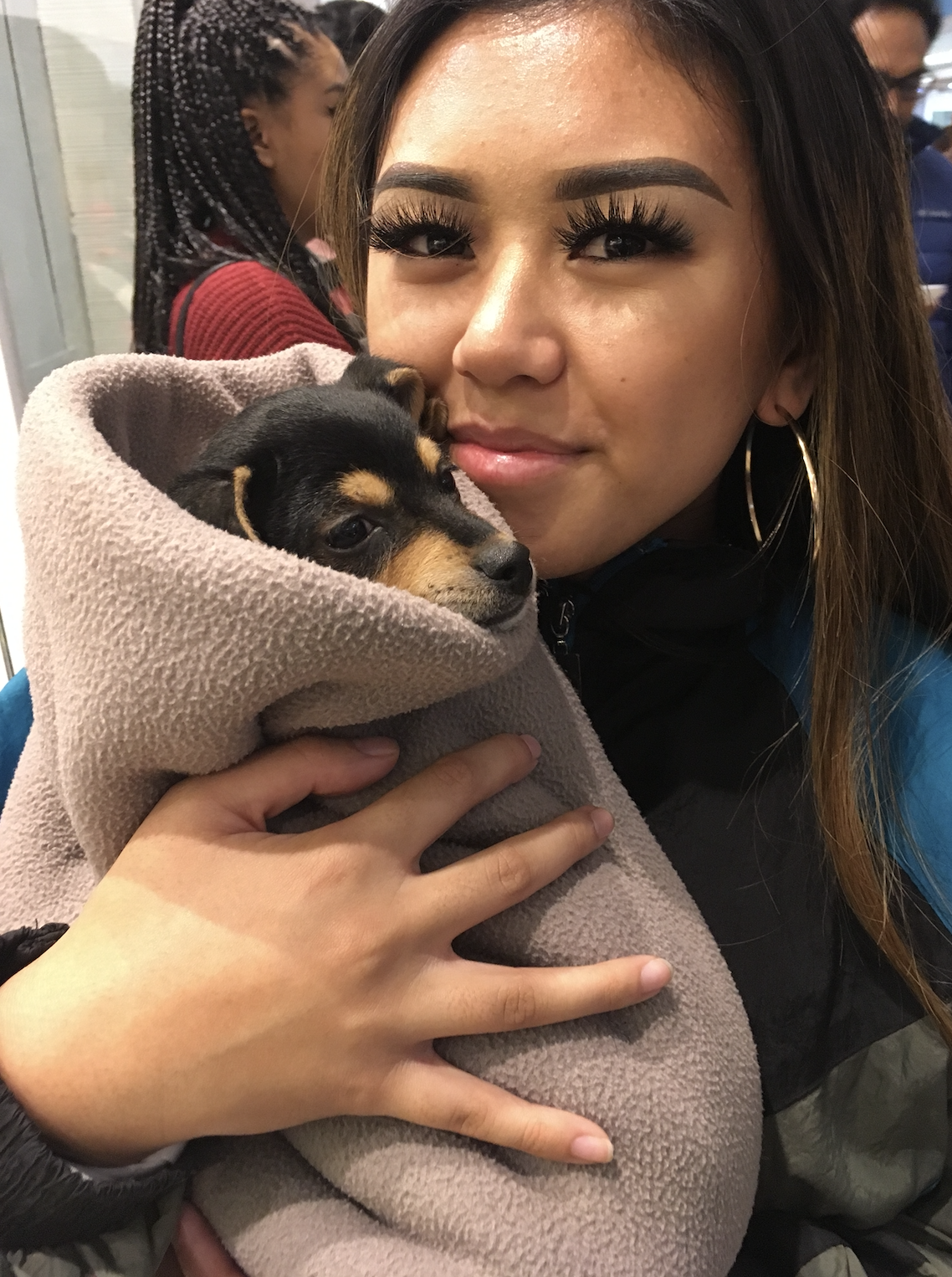
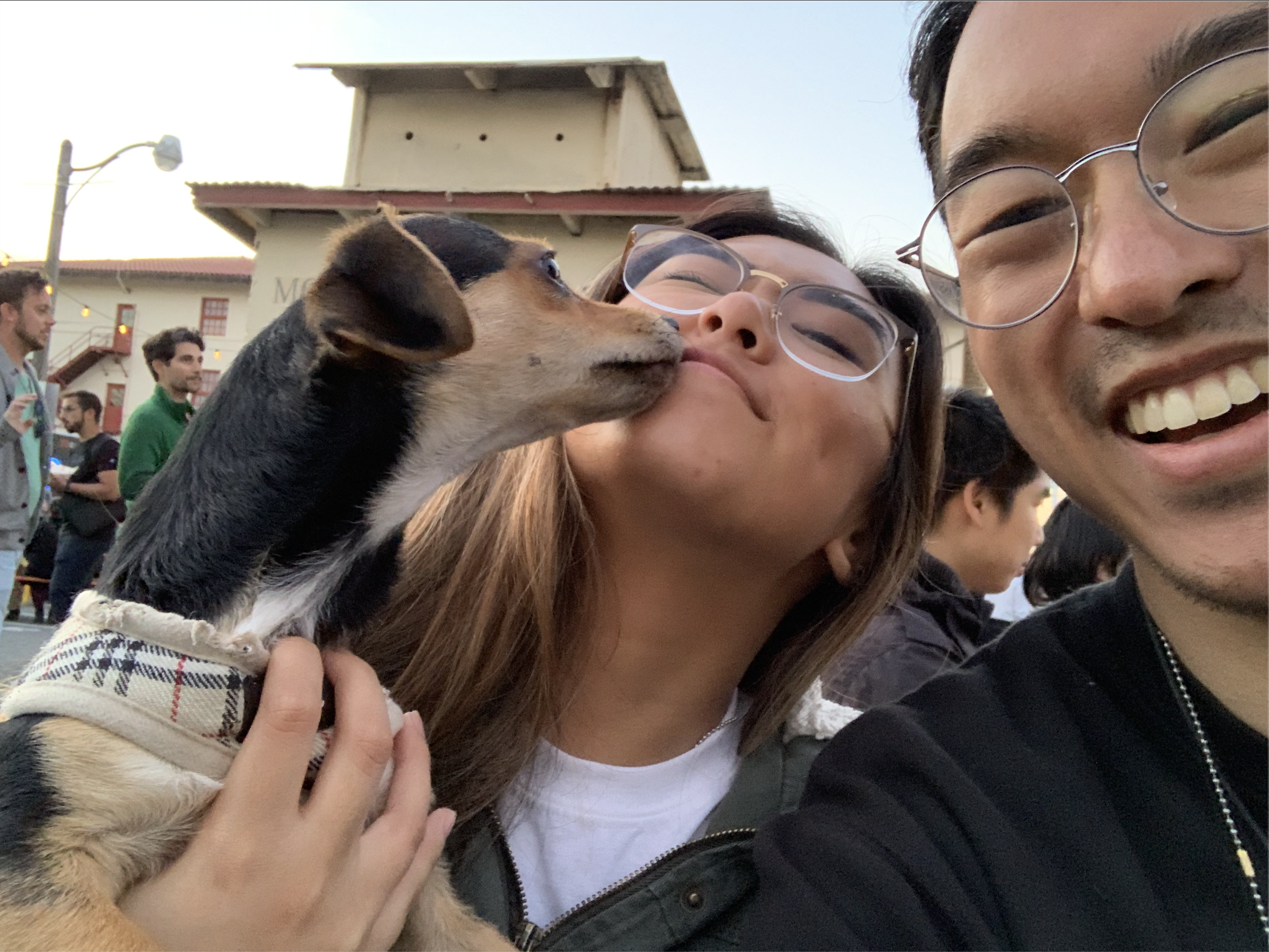
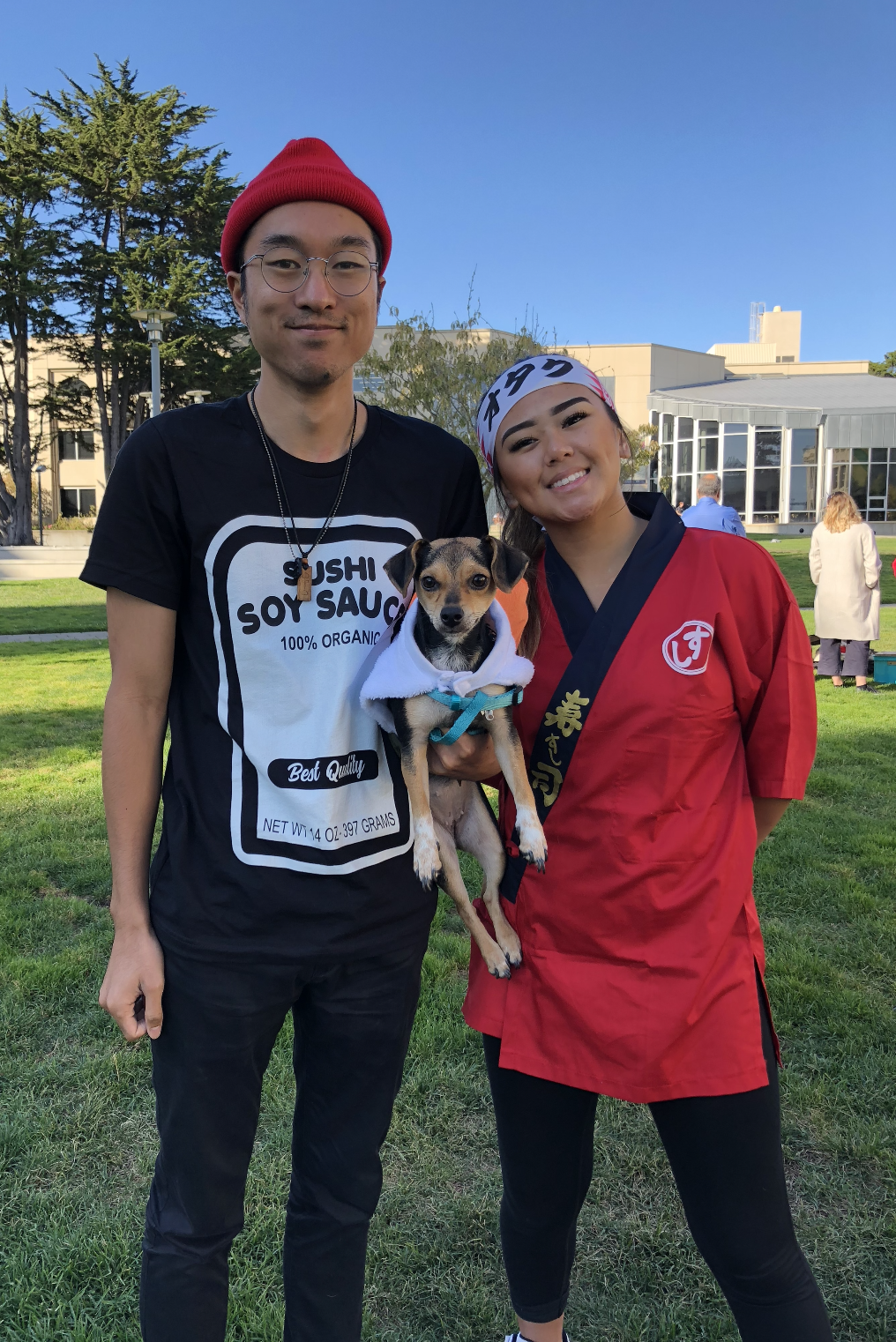
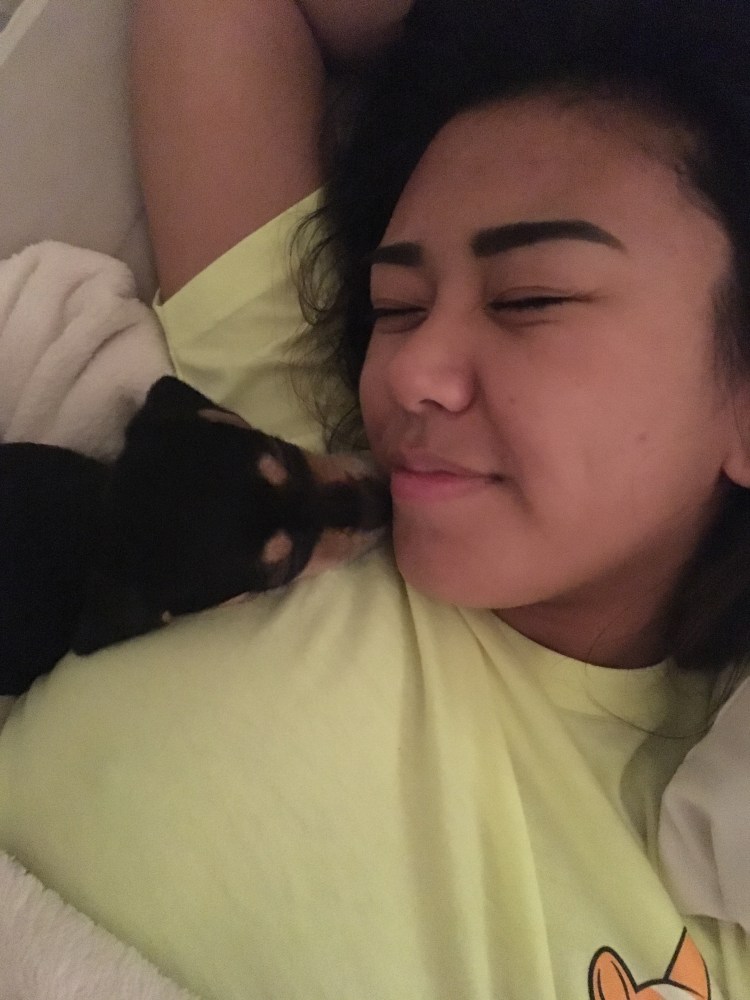
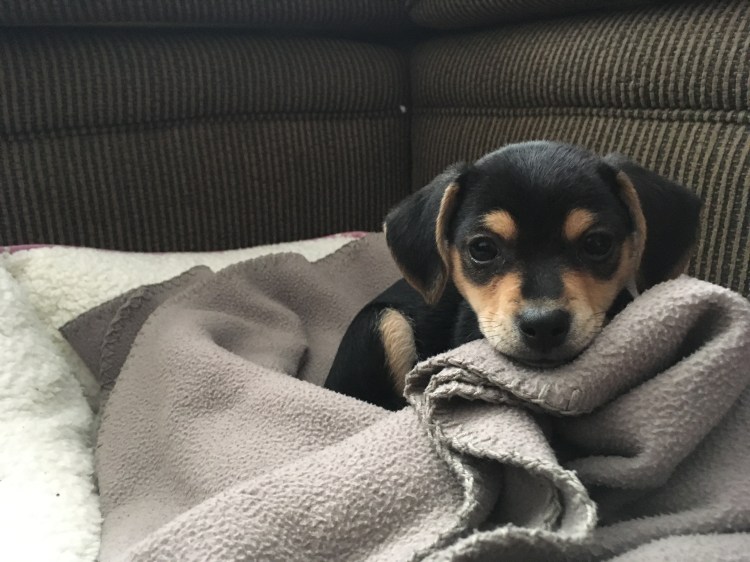
Prologue: Aya and I decided to get a dog back in 2018. She seriously started looking for rehoming a puppy that Fall, and I didn’t really think anything of it. It was my first year working full-time so finding a dog wasn’t at the forefront of the laundry list of teacher tasks I was drowning in. She sent postings of shelter pupps, new borns, adoptions, or one’s looking for a new home, but nothing ever came of the phone calls or texts she made. Some were definitely scams—asking us to buy for gift cards electronically and send them over.
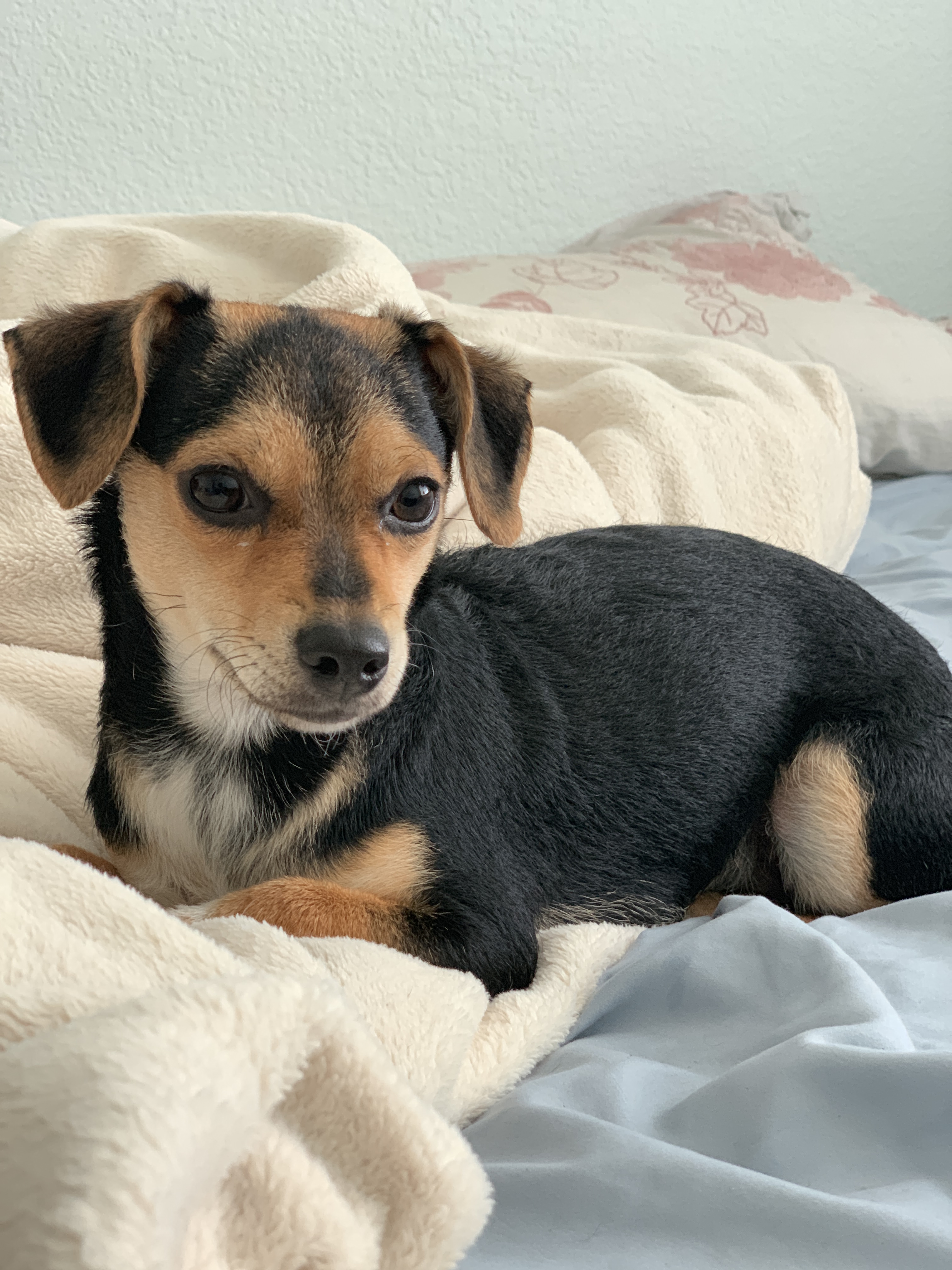
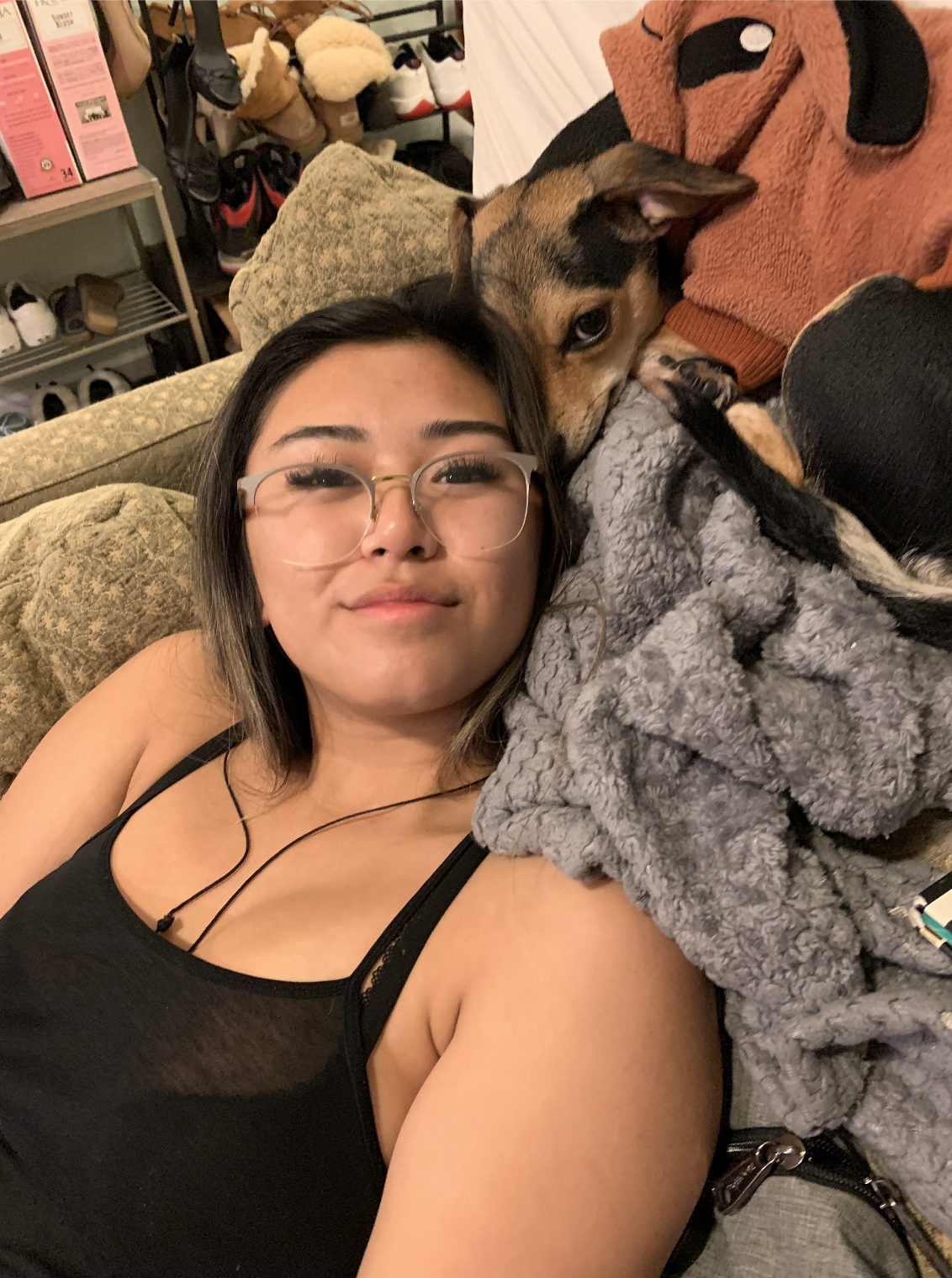
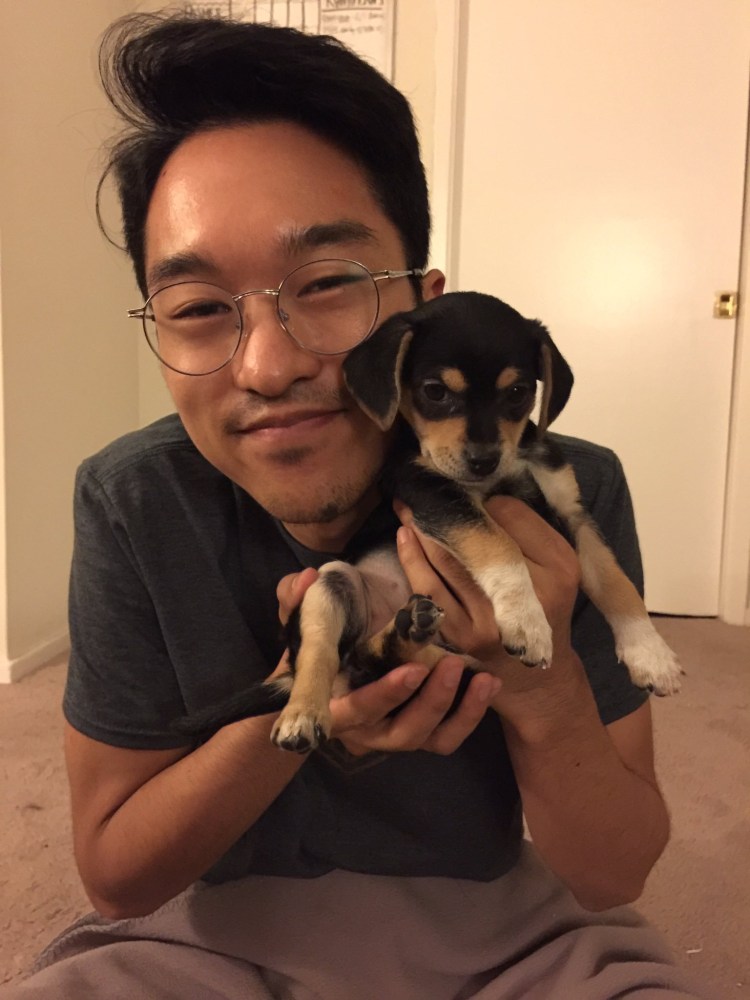
After a few months of Aya’s search, she got a call back for tea cup dachshund puppies. We were looking to re-home one of Miso’s brothers at the time, but by the time we met with with the family, they told us Miso had been the last of her litter. So we took her home.
The initial shock for me was huge, in a way that I didn’t react at all. I was happy, but I’d never had a pet outside of goldfish before. I don’t recall how long it took to sink in that I had another life join mine. Aya asked me a handful of times “Are you happy?” and I was, but I don’t think I knew how to react. In my mind, I had already set up that Miso would love Aya more. Aya grew up with dogs, she knows how to take care of one.
I don’t remember exactly when, but there was a moment where Miso showed me affection specifically. That she showed me, “you’re my dad & I love you”.
Getting a puppy with Aya raised a lot of concerns and fears. In any relationship, you go through imbalance—and I was just starting my first year full-time. I didn’t feel like I had my life together to start taking care of another one. I assumed that bringing a puppy into our lives would drive the wedge between us even further. At the beginning it brought more problems to light, but over time, Miso brought us together. And not in a band-aid solution kind of way either. In a way, Miso helped us grow into the adults we are now.
I never really understood the love of a dog. I know I wanted one growing up, but I was actually always afraid of dogs. And most of my interactions were with medium to large dogs. So I thought I was just going to be afraid of the one I was raising.
But the more I cared for her, the more she warmed up to me—eventually learning how time works and when I was supposed to return. Then showing the utmost unconditional love & joy when I came back. If anything, Miso reminded me what it means to love and be loved.
Not everything is perfect. Miso is still learning to live, and that takes patience. Our relationship isn’t perfect, but there isn’t anyone that could replace Aya.
When I reflect on my relationship with Aya—I’ve come to see how our friendship & partnership is only beginning. I have best friends, who I have known close to and over a decade and I’ve had falling outs with them too, but it takes time to get to know anyone to see who they really are. The imbalance I mentioned earlier, it still exists and I don’t think it’s meant to go away. It’s meant to be worked on and grow from. But now I’m seeing how our dedication, love, and commitment to one another is creating the foundation for us to be great puppy parents and young adults.
Both Aya & Miso have taken a big part of my heart. Every day and night is a joy—and every moment is filled with laughs and love. Even when we’re upset at Miso, we’re upset as a team. When we are with one another, we know it takes time to navigate through that, and that our love & commitment towards each other is stronger than the dispute.
Prologue: This is a scaffold that I have been developing over time, adapted from an assignment that one of my Teacher Ed professors assigned us to do when completing his readings every week.
During my undergrad in one of my Teacher Ed classes, one of our weekly assignments for the class readings was to use a table to organize our annotations. We were tasked to find parts of the essays/readings that seemed important to us to share in discussion by organizing it into three columns: quotes from the text, our thoughts of what it means, and questions we have.
It was honestly a mundane task and it didn’t really give me a sense of purpose for completing the assignment other than homework points or not feeling behind my colleagues. I don’t really remember when I started using this tool for my own organization and sanity. I vaguely remember during the course my professor said the table/chart would be a good quote bank in the future, but never really gave any other purpose for it except for preparing us for discussion by having evidence ready for our class.
I figured it would be a good annotating tool for my students because I saw it as a way to streamline the essay writing process and maximize the drafting time to focus on refining the essay rather than trying to figure out the direction of the essay after only when the essay is assigned.
This took the last two semesters [about 4-5 units] to refine. Similarly to my professor, I simply just assigned the “Metacognitive Annotation Organizer” [what the handout was originally called] to my students as they read a series of short stories. At the time I added reading comprehension questions as well, but there wasn’t a clear connection between the annotations and the reading questions. Although students produced great work, it almost became too much for one homework assignment every time I assigned a short story.
During my first year, I wasn’t sure whether students should use sticky notes to annotate or not. I was so conditioned by my own high school experience and student teaching that I thought it was the only way. But I would also often assign the “Metacognitive Annotation Organizer” as a separate homework assignment and advise students that the places in the text they sticky-noted would be good for the Organizer.
I came to the conclusion that sticky note annotations were too cluttered and more often didn’t show me student’s thinking. Because I kept assigning a quota of sticky notes per chapter, students were just stuffing them in wherever. And I would lose class time flipping through every book just to check student’s annotations. I needed a more efficient system.
As my coach helped me streamline the grading process, he suggested that I have students self-assess their sticky notes with a rubric. I later ended up incorporating an example into the “Literary Analysis Annotation Organizer” along with essay prompts to give students a sense of direction as they annotate.
——————
I created the “Literary Analysis Annotation Organizer” because I found sticky notes to be ineffective. From my own high school experience, I didn’t see the purpose of wasting sticky notes just to show my thinking. I also found it ineffective for writing essays, which was the ultimate goal of reading a text in English, because I wouldn’t always remember what I was thinking at the time I wrote that sticky note with a symbol to remind of character growth.
I used to call this the “Metacognitive Annotation Organizer” because it does require a student to be aware of one’s own understanding of their thought process, but I felt like that term confused students. Literary analysis is still daunting, but it is the skill that I want them to walk away with.
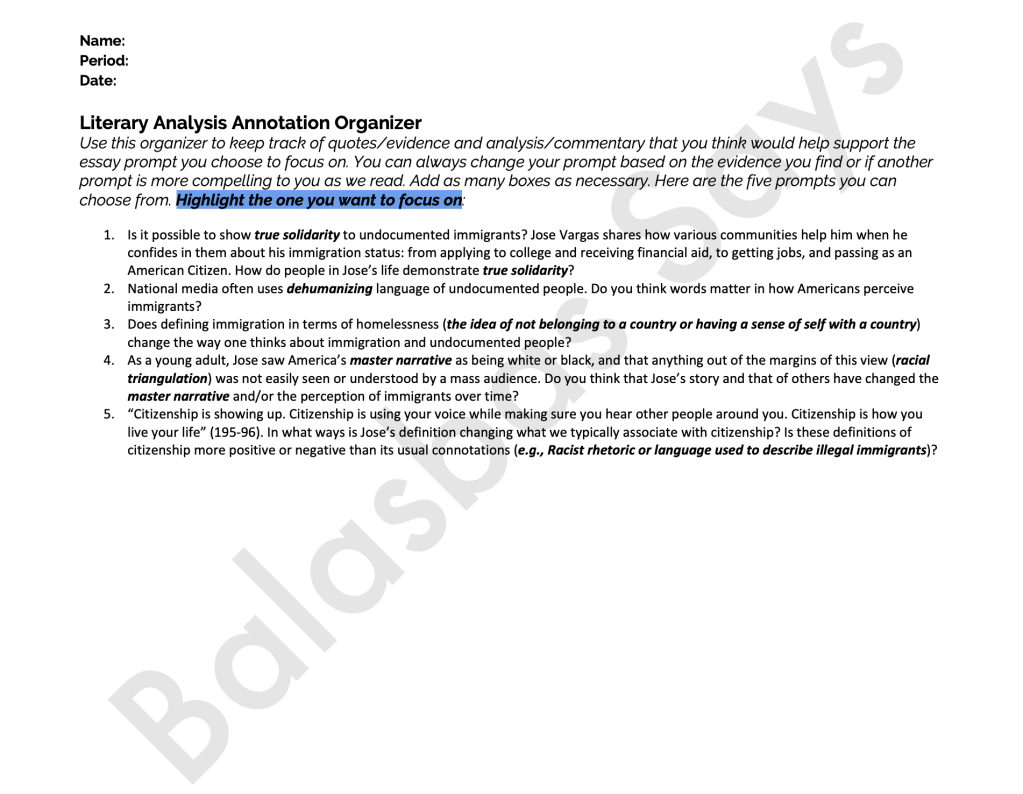
Literary Analysis Annotation Organizer Overview
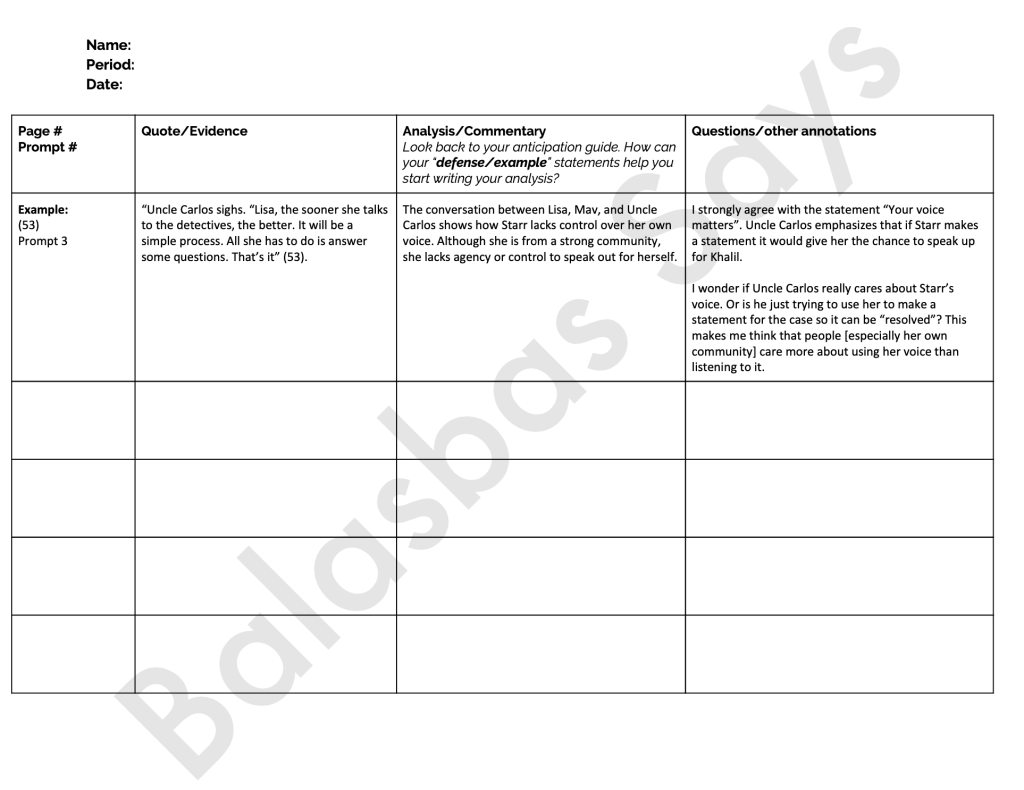
This 1st page where I have essay prompts is for students to select from for their essay after finish a text. The purpose of having these is for students is to have a guide when annotating, but also helping them track evidence for the prompt of their choosing instead of using essay writing/drafting time doing so. Essay Prompts Examples for teaching – Dear America: Notes of an Undocumented Citizen by Jose Antonio Vargas, 11th Grade American Literature
This scaffold can be used electronically or printed for students who prefer to write. If your site has access to computers or as an educator you are trying to promote technological literacy:
This is a great way for students to organize their evidence for the essay instead of trying to sift through sticky notes at the last minute.
It’s a task that asks students to demonstrate their thinking in a low-stakes way, I personally don’t expect students to be grammatically correct or formal, but at the least code-switch.
I have found that this gives students [and from my own experience using this] a sense of purpose when reading. Not simply to fill out the table for the grade, but having a space to express my ideas on the evidence before a formative assessment/high stakes assignment like an essay.
Since this document is electronic, students can copy and paste their evidence & analysis into their essays. I have found that this tool allows students to practice essay writing before the actual essay. Building the meat of their body paragraphs before the first draft and workshopping process.
Epilogue: This task has been more effective in students showing their thinking, my students ask great discussion questions or are better able to express their thinking. I can see where students are struggling, grappling, and comprehending the text.
But there’s a lot that could be improved when teaching this tool. I have never really modeled in-class how to use the table. I have just assigned it to students and have been collecting student answers as the exemplar grade. Students figure it out over time, but I definitely think it would be useful to read with students first, show them what I would annotate.
Only recently have I showed varying student examples of what I would grade as emerging, meeting the standard, and moving towards mastery.
I also need to find ways to use this tool outside of essay writing. Students ask great questions and more often than not they’re trapped on this document for only my eyes to see. Maybe a socratic seminar or discussion that requires students to use their annotations would give another purpose for students doing this assignment.
Here’s a link to a copy of the resource and California Common Core State Standards that align with the scaffold. Feel free to share or use it in your own classroom!
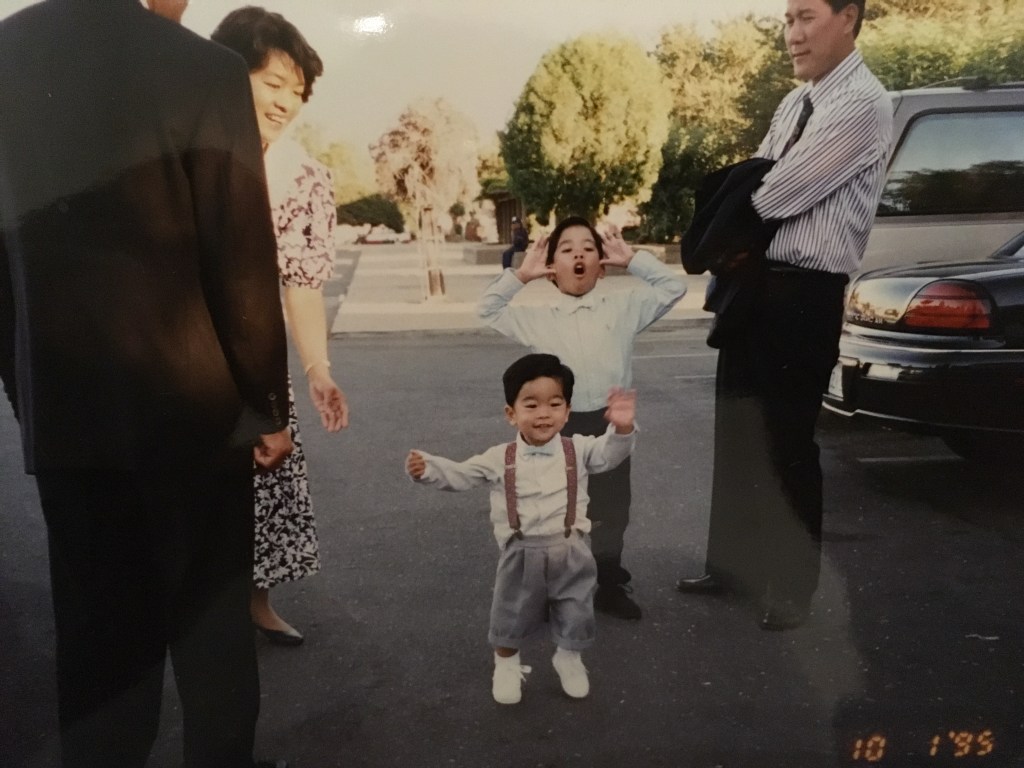
A few days before the news of Gigi & Kobe’s death I saw this video of John Boyega on Twitter— surprising his parents with a house of their own. The weeks following of the Bryant accident has made me reflect on the recent deaths of my family and friends. And something he said resonated with me:
“As your parents get older they become your babies. They’re curious everyday about who you are as a person”
John Boyega
I feel my parents growing older everyday. And the more I transform into an adult, the more they regress as one. I grow with more frustrations, pains, and come out with a better understanding of the world. But they’ve been through it, growing up. Some form of it. And they know, that time is used more wisely caring and loving your children or loved ones—rather than continuing to be stressed by the problems around them.
I used to hate that my parents were older than most of my friends’ parents. Because I thought my parents never understood me. And now, I still hate that they’re older, because I’m losing time that I should’ve cherished with them when I spent everyday under their care.
October 1995
Don’t get me wrong—they’re still my parents and infuriate me sometimes. But now I understand that they went through something similar, if not more difficult than what I’m experiencing. With less privilege, with less resources. With different circumstances and a different world of problems.
And now, they’re dealing with the loss of and challenges of taking care of their parents as they reach the end of a happy life.
“Parents just want to be included”
David So, GeniusBrain Podcast
I try to let my parents know more about me. Not necessarily everything, but to let see what kind of person I am. To let them know that their investment in me as paying off in the hard work I’m putting into my career, my relationships, and my livelihood.
Prologue: I can’t say I’m diagnosed with this because there are people out there who probably really struggle with their accepting appearance or given body. It affects their daily lives and sometimes even hour to minute interactions with their appearance.
For those that don’t know, body dysmorphia is an obsessive focus on a perceived flaw in appearance. The individual would spend hours and maybe invest time daily in fixing that part of themselves.
————
Oahu, HI – September 2011
Oahu, HI – September 2011
My whole life I’ve struggled with appearances. From the start I was born with physical differences from everyone else—a whole in my heart. Luckily, I didn’t face too many challenges or experience discrimination because of that.
But I did grow up with a lot of blemishes on my body, more specifically—moles. Or what most Filipinos call them, beauty marks.
I never thought of them as beautiful. They were something only I really had and my cousins didn’t. And of course, I have a large obvious one on my chin. Not completely under my jaw, but visible enough to be noticed.
Growing up I didn’t think anything of it. I can’t really remember too many people questioning it, but I know I didn’t like it. Maybe more so when my pediatrician started pointing it out. That
“It could be cancerous”
Great. At the age I heard that, I knew what cancer was. It took away family members, and something that was going to take my Popo away soon. So why wouldn’t I want to get rid of something that could kill me. There was no way of telling what would come of it. So my doctor told my parents to monitor it.
I often was bullied for having so many moles. “Connect the dots” was a nickname I had been given. And for some reason, it only came up when I would defend my friends from their bullies. It’s like the first insult the bullies could come up with.
I didn’t back down, but it definitely made me think. None of my cousins or friends had moles or visible “beauty marks”. Just the old people. Parents. Aunts. Uncles. And it felt unfair.
At some point, my parents asked if I wanted it removed. My pediatrician said that soon it will be too large to ice off [with dry ice] and that it would need to be surgically removed. I said no. I’ll keep it. I don’t remember all the reasons, but I knew that it was a part of me that I couldn’t just get rid of.
My parents even asked if I was sure—probably because they knew how I felt about it.
Today, I still have it with me. Now-a-days it’s covered by my facial hair. And when I clean shave people forget that I even had a mole. I think it’s so normal to some people they just ignore it because I don’t make it a big deal of or draw any attention to it. A lot more moles that have just spawned all over my body. It’s said moles appear because of the over-production of melatonin from someone who’s outside a lot. So they cluster. And become “beauty marks”.
I think because of them, I’ve become immune to social pressures to look a certain way. It helped me accept that, I am the way I am. But even still, I struggle with accepting my own body as it is.
“Are you eating?”
“Did you lose weight?”
“Why are you so skinny?”
I still don’t get it. Filipinos either call you fat or skinny. And neither of them are okay. Even if you’re in between they’ll just comment on whether or not you’re leaning towards one or the other.
In my case, when it came to friends or social settings, I was envied,
“I wish I had your ‘problem’”
“But it’s better to be skinny”
I understand, that I’m lucky to have my metabolism. I’m lucky I’m not losing weight in an unhealthy way. But hearing all these comments constantly reminded me how I’m not what everyone else is. Healthy.
I’m in my mid-twenties and I have students who are larger than me. I’m so skinny I look younger than some of them. Over the past 2-3 years I’ve finally had the courage to enter the gym by myself. And I’ve definitely put on muscle, the most I weighed in was 135 from 120. But it fluctuates because I can’t afford the time to hit the gym religiously.
3 years ago, I didn’t think it was possible for me to gain weight. I finally did, but I can definitely go back down to 125 if I just don’t exercise. I know that in my late-twenties my metabolism might slow down—who knows. But that doesn’t change the fact that I still do not accept my body for what it is.
Whenever I see a young man that is definitely an adult with scrawny arms—that lack any meat or muscle. I just think, “shit, is that what people see when they look at me? No wonder I get all these comments about my weight”
I’m pretty sure I’ve put on muscle. Or body in general. Enough for my brother and girlfriend to notice. But even then, I look in the mirror, see the muscle. But when if I’m not flexing, I still feel one-dimensional. I can still see my ribs. I can still see my spine. My collar bones. My shoulders.
I still don’t feel enough.
——————-
Epilogue: it’s an everyday battle, but it doesn’t always have to be. I definitely don’t think about my body in that way every day or hour. But when I do, it hurts.
I’m slowly accepting my body as it is. Trying not to compare myself to others. I can’t put on weight as fast, or maintain it.
But that’s okay. That’s what I was given. It’s okay to accept that.
Prologue: My parents have been asking for my brother and I to put a video together of the trips we had over July 2019. It’s been awhile, but it’s hard to make time to be creative while balancing work.
Before, I could just slap videos together with iMovie, but I knew that’s not what I wanted. I didn’t have the tech or programs to put together the kind of videos I want to produce. I feel like I maxed out iMovie’s capacity, even my best friend was surprised I figured out how to layover green screens, masks, and split screens on the program.
During our trip, my brother and I have finally felt comfortable enough with our equipment to try different shots or angles we’ve always envisioned capturing. So over the past year I saved up some money to get myself a new laptop that could handle a proper editing program.
My brother had invested in the Adobe cloud suite so we could use Premier Pro to move away from free programs and test new limits of what I was capable of with iMovie. Unfortunately, I couldn’t figure out the program. It definitely had all the things I needed to play around with, but I could see where a college class or even my cousin’s degree in cinema arts explains how all of these tools function.
My best friend was able to get me Final Cut Pro, and the lay out was just a more advanced version of iMovie—so it was a lot easier for me to adjust. I spent a lot of time looking into effects, transitions, color grading, how to use the program in general. And after at least 19 hours of editing—not including learning from YouTube videos, I finally made a video that broke the boundaries of my knowledge of video editing.
Now I get why lighting and the way you shoot is so key. Now I know a little of how my friends and family that are full-time into cinema and film feel. I thought I did before, but compared to the projects I used to make, I think this really challenged my endurance to get to the end. And I’m ready for more.
Enjoy this video and share it with friends! Hopefully I can make more videos and posts that detail more of our trip and not just about the editing process.
Prologue: This is a piece that I wrote one month after asking my girlfriend to go steady. Be official. Be together exclusively. I love looking back at things that I wrote at the beginning of our relationship. I actually wrote a lot. Most of it transformed into photos, and videos of her or moments together. Some are locked in a book I gifted to her—thats for her eyes only. We’ve gone through a lot of struggles, growth, and transformations. What I love about this piece the most is that my feelings have only grown—loving her more than before
Recounting the night. 010217
I wish I remembered to write that night I got home.
But I’m also glad I didn’t.
Having to reminisce let’s me know that I just want to live in the moment. Absorb every second I have with you.
The day I arrived felt like a dream.
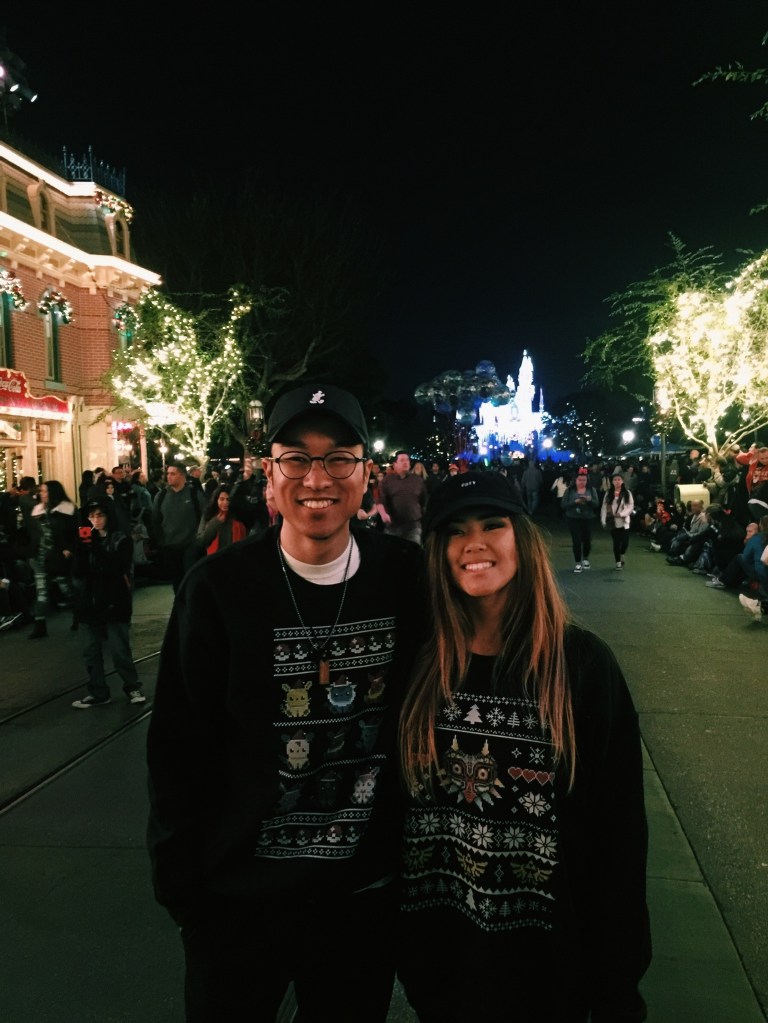
So magical that DisneyLand can’t even compare. The amount of joy, love, and happiness that filled the air around me was tremendous.
It felt cosmic. The world was telling me that this was right. The touch of your hand, tight around mine.
The music soothing my ears, making my fingers and heels dance. The food melting my soul, rolling my eyes back, releasing the tension in my shoulders, and cupping my hand around my mouth.
The crisp air pushes me closer to you for warmth. The long path to the light house stretches for an eternity, so we could walk forever.
The lights of the pier twinkled like a sign from the universe. Your presence, warmed my heart, sending signals to mine telling me that you’ll always be here for me.
And mine ready to shout that I’ll always be here for you.
For the first time in my life, I have never felt more right with the universe. More right with just one person. That night is one I will never forget. A night that changed my life forever.
Epilogue: Our lives continue to change everyday. And I’d like to say that my feelings haven’t changed, but really they have. I didn’t think love could grow and break the boundaries of what I idealized as a perfect relationship. A perfect relationship to me today is one that can work with the push & pull tensions that arise from disagreement. That not just make compromises but willingness to adjust when necessary. And although that’s something we’re getting better at, I think that’s part of being a life-long learner and partner in this relationship. Wherever life takes us next, I know that we can navigate it together.
We also just celebrated our 3rd anniversary, so check out our channel to see what we’ve been up to!







 Balasbas Says